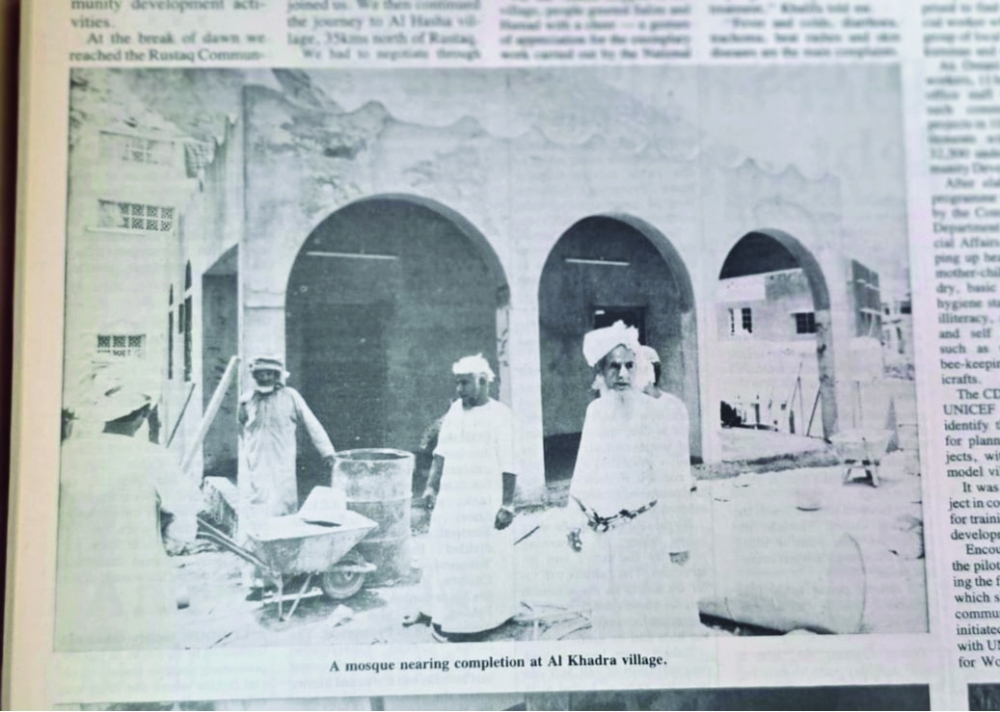





More than four decades ago, the Observer (August 12, 1984) documented an important chapter in Oman’s social and rural development journey through a field report titled “Working for an Improved Quality of Life.”
Written by Clifford Anthony, with photographs by Fathy Romia, the report took readers from Muscat to Al Rustaq and then into remote villages including Al Hasha and Al Khadra, offering a first-hand account of the National Community Development Programme (NCDP).
The report captured a period when Oman’s development efforts were extending beyond the country’s growing towns and cities to remote communities. It described initiatives aimed at improving healthcare, literacy, agriculture, animal husbandry, women’s participation, sanitation and basic village infrastructure.
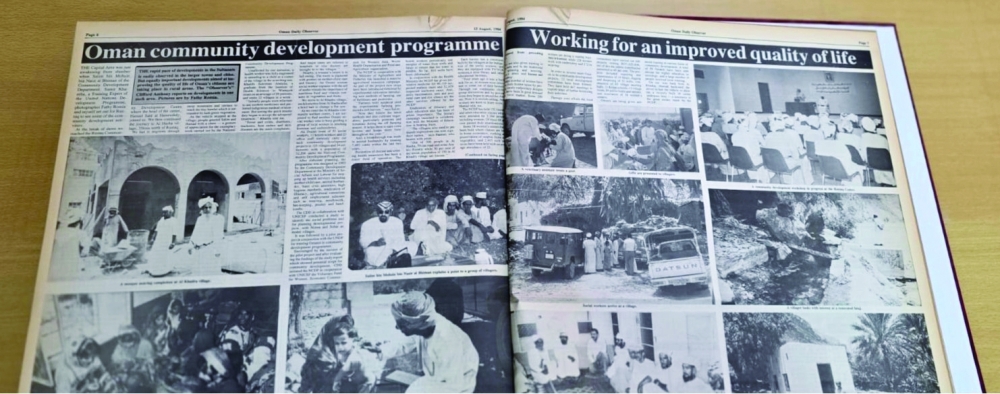
At the time, the programme was operating across 105 villages and 54 settlements, serving a population of around 32,500 people, with an Omani field team comprising 53 social workers, 11 health workers and 23 office staff.
The article highlighted the work of health workers who travelled between remote villages, literacy classes that enabled residents to move from using thumb impressions to signing their names, and women’s centres where Omani women received training in home economics, handicrafts, embroidery, spinning and weaving.
It also recorded the programme’s agricultural extension work, including the introduction of new crops and modern farming methods, as well as veterinary interventions that treated 7,483 cattle over two years.
Perhaps most significantly, the report showed how development was being pursued through community participation. Local development committees had been established, and villagers themselves contributed to projects involving aflaj maintenance, wells, meeting halls, Quran schools, roads, and women’s centres.
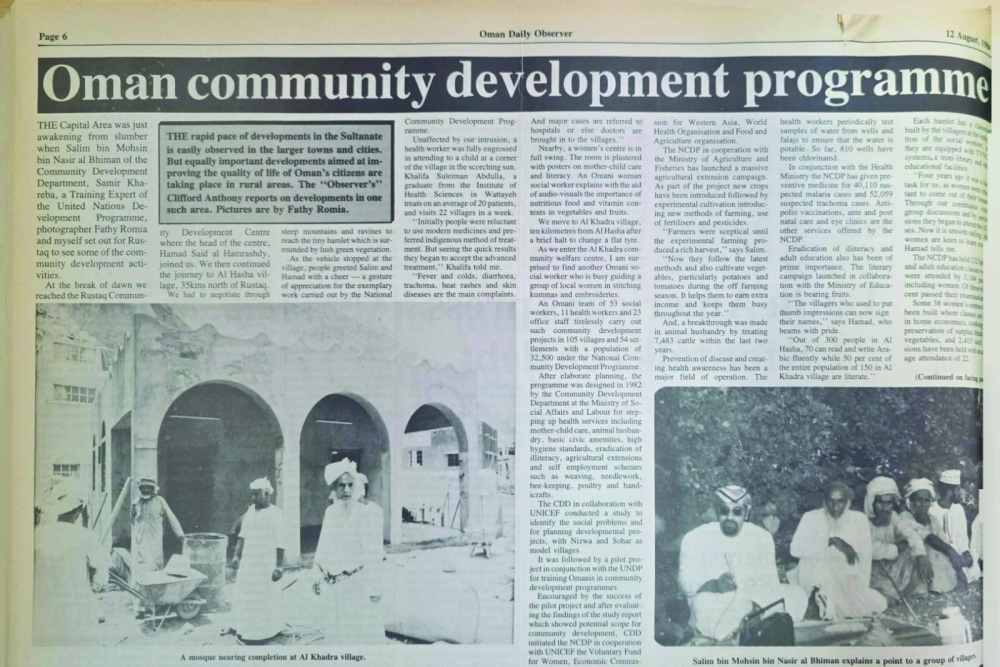
The figures preserved in the article provide a valuable snapshot of Oman’s development priorities in the early 1980s. The report noted that 260 local projects had been implemented at a total cost of RO 3,620,836, with public contributions accounting for 49 per cent.
The closing scene of the report is particularly symbolic. On the journey back from Al Khadra, the team stopped to view a newly constructed 20-metre underground falaj, which the reporter described as a testimony to the progress being made under the National Community Development Programme.
More than 40 years later, the article serves not merely as a record of individual projects, but as a historical window into the foundations of Oman’s approach to rural development and community participation.
FACTFILE
- At the time, the programme operated across 105 villages and 54 settlements
- The programme served a population of around 32,500 people
- Omani field team comprised of 53 social workers, 11 health workers and 23 office staff
- 260 local projects had been implemented at a total cost of RO 3,620,836
- Public contributions of the projects cost accounted for 49 per cent
Oman Observer is now on the WhatsApp channel. Click here